Fiber Optic Stripping Tools
Shop fiber optic strippers for removing cable jackets, buffers and fiber coatings during termination, splicing, repair and cable assembly. Compare each tool’s supported stripping functions and dimensions before ordering.
Shop Fiber Optic Strippers and Cable Stripping Tools


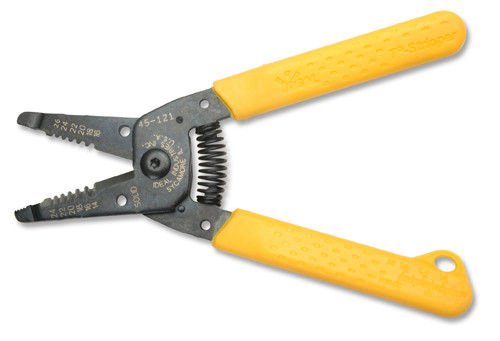


Fiber Optic Strippers for Cable and Fiber Preparation
Fiber optic stripping tools remove specific protective layers from a fiber or cable before connector termination, cleaving or splicing. Depending on the cable construction, preparation may involve removing an outer jacket, a tight buffer or the coating surrounding the optical fiber.
A fiber optic stripper must be selected according to the layer being removed and its dimensions. Connector type alone does not determine the correct tool. An LC, SC, FC or ST assembly may require similar fiber preparation, but the cable jacket, buffer and coating dimensions can differ.
Precision Fiber Products offers mechanical fiber strippers for professional cable assembly, laboratory, production, installation and repair work. The current verified collection includes multi-stage fiber optic strippers, a 900/250 µm buffer stripper, an adjustable jacket stripper and a specialized fixed-hole model.
Types of Fiber Optic Stripping Tools
Fiber Coating and Buffer Strippers
A fiber buffer stripper is designed to remove a specified buffer or coating while minimizing contact with the glass fiber underneath. The tool opening must match the dimensions identified by the manufacturer.
The Ideal 45-352 MINI-LITE strips 900 or 250 µm buffer coatings from 125 µm fiber. Its larger stripping notch can also remove a 3 mm outer buffer jacket.
The Paladin Economy Fiber Optic Stripper combines three preparation functions in one hand tool. Its documented stripping positions cover 2–3 mm fiber jackets, 900 µm buffers and 250 µm acrylate coatings.
Fiber Optic Jacket Strippers
A fiber optic cable stripper or jacket stripper provides access to the buffered fiber and other internal cable components. Jacket dimensions, material and construction must be verified before selecting the tool or adjusting its cutting depth.
The Paladin Adjustable Jacket Stripper is listed for fiber optic cable as well as selected wire applications. Review its complete product specifications before using it on a particular cable construction.
A jacket stripper should not be used automatically on every round, armored, loose-tube or drop cable. Specialized cable constructions can require dedicated slitters, ring-cut tools or mid-span access equipment.
Precision Fixed-Hole Fiber Strippers
A fixed-hole fiber optic stripper is manufactured for a defined tool-opening diameter. It is useful when a production or specialty application requires a specific stripping geometry.
The Miller FO 103-S-140 is a single-hole fiber optic stripper with a nominal 140 µm tool-hole diameter. This dimension describes the specialized tool opening and should not be confused with a 140 µm cable jacket or a general-purpose 900/250 µm stripper.
Confirm the coated fiber dimensions and required remaining diameter before ordering a specialty fixed-hole tool.
How to Choose a Fiber Optic Stripper
Choosing the correct fiber stripping tool begins with the cable or fiber specification. Do not select a tool solely because its product name contains “fiber optic stripper.”
Identify the Layer Being Removed
Determine whether the job requires removal of:
-
An outer fiber optic cable jacket
-
A 2–3 mm cordage or buffer jacket
-
A 900 µm tight buffer
-
A 250 µm fiber coating
-
A coating from a specialty-diameter fiber
-
A loose tube, ribbon matrix or specialized drop-cable structure
Each layer can require a different opening, blade geometry or stripping method.
Match the Tool to the Required Dimensions
Compare the cable and fiber dimensions with the specifications for the individual tool. A stripper designed for a 900 µm buffer should not be assumed to work with every coating, jacket or buffer-tube diameter.
When reviewing specialty models, distinguish between the incoming coated-fiber diameter, the diameter being exposed and the nominal opening of the stripping tool.
Choose a Dedicated or Multi-Stage Tool
A multi-stage fiber optic stripper can prepare several layers with one tool. This may be convenient for common 2–3 mm cable, 900 µm buffer and 250 µm coating preparation.
A dedicated stripper provides one defined stripping function or opening. Dedicated models can be preferable for controlled production processes or specialty fibers where the required dimensions are already known.
Verify the Cable Construction
Round cable, tight-buffered fiber, loose-tube cable, armored cable, FTTH drop cable and ribbon fiber are different constructions. A product described as a cable stripper or slitter is not automatically suitable for every fiber optic cable.
Check the cable manufacturer’s preparation instructions and the stripping tool’s documented material, diameter and cutting-depth limitations.
Fiber Preparation Before Termination or Splicing
Fiber stripping is one part of a complete preparation process. The sequence varies according to the cable, connector and splice procedure, but may include:
-
Removing the outer cable jacket with a compatible jacket stripper.
-
Trimming strength members with the appropriate fiber optic cutting tool.
-
Removing the buffer or coating in the length specified by the connector or splicing procedure.
-
Inspecting the stripped fiber for coating residue or visible damage.
-
Cleaning the prepared fiber with an approved fiber optic cleaner and lint-free wipe.
-
Cleaving, terminating or splicing the fiber according to the equipment manufacturer’s instructions.
Use controlled stripping motions and follow the tool manufacturer’s instructions. Avoid excessive force, long unsupported stripping passes or incompatible blade openings that could scratch or break the fiber.
Fiber Optic Stripping Tool Applications
Fiber optic strippers are used in applications such as:
-
Fiber optic connector termination
-
Fusion and mechanical splice preparation
-
Patch cable and pigtail assembly
-
Telecom and broadband installation
-
Data center cabling
-
Fiber optic production
-
Laboratory fiber preparation
-
Network maintenance and repair
-
OEM cable assembly
-
Specialty fiber processing
The correct stripping tool depends on the cable construction and preparation procedure used in the individual application.
Fiber Optic Stripping Tools FAQ
A fiber optic stripper is a tool used to remove a specified jacket, buffer or coating from an optical fiber or fiber cable. The correct tool exposes the required underlying layer without intentionally cutting or damaging the glass fiber.
A 900 µm stripping operation removes a larger tight-buffer layer. A 250 µm stripping operation removes the coating closer to the glass fiber. Some multi-stage tools support both dimensions, while other tools have only one defined opening.
Some multi-stage strippers have separate openings for multiple layers. The Paladin Economy Fiber Optic Stripper supports documented 2–3 mm, 900 µm and 250 µm stripping functions. Other models are designed for a more specific operation.
A general-purpose wire stripper should not be used unless its specifications explicitly identify the fiber cable construction and dimensions it supports. Tools designed for copper AWG sizes, coaxial cable or UTP insulation are not automatically suitable for optical fiber.
Confirm the coated-fiber diameter, the required exposed or remaining diameter and the nominal opening of the tool. Specialty fixed-hole products such as the Miller FO 103-S-140 should be selected from the complete dimensional requirements rather than from the model name alone.
Do not assume compatibility. FTTH drop cable, ribbon fiber and loose buffer tubes may require specialized stripping, slitting or access tools. Use a product only when its specifications confirm the applicable cable construction and dimensions.
Wear appropriate eye protection, control the prepared fiber and immediately place all glass fragments in a suitable fiber-shard container. Keep food and drinks away from the work area and follow the safety instructions for the cable, tool and cleaning materials.
Select the Right Fiber Optic Stripping Tool
Compare the verified fiber optic strippers above by stripping function, supported dimensions and cable compatibility. Contact Precision Fiber Products for help selecting a buffer, coating or cable jacket stripper for your termination, production or splicing process.