Fiber Optic Crimp Tools
Shop fiber optic crimp tools, connector dies and pneumatic equipment for cable termination and production assembly. Compare complete hand tools, handle-only systems and die configurations for supported fiber optic connectors.
Shop Fiber Optic Crimp Tools and Dies


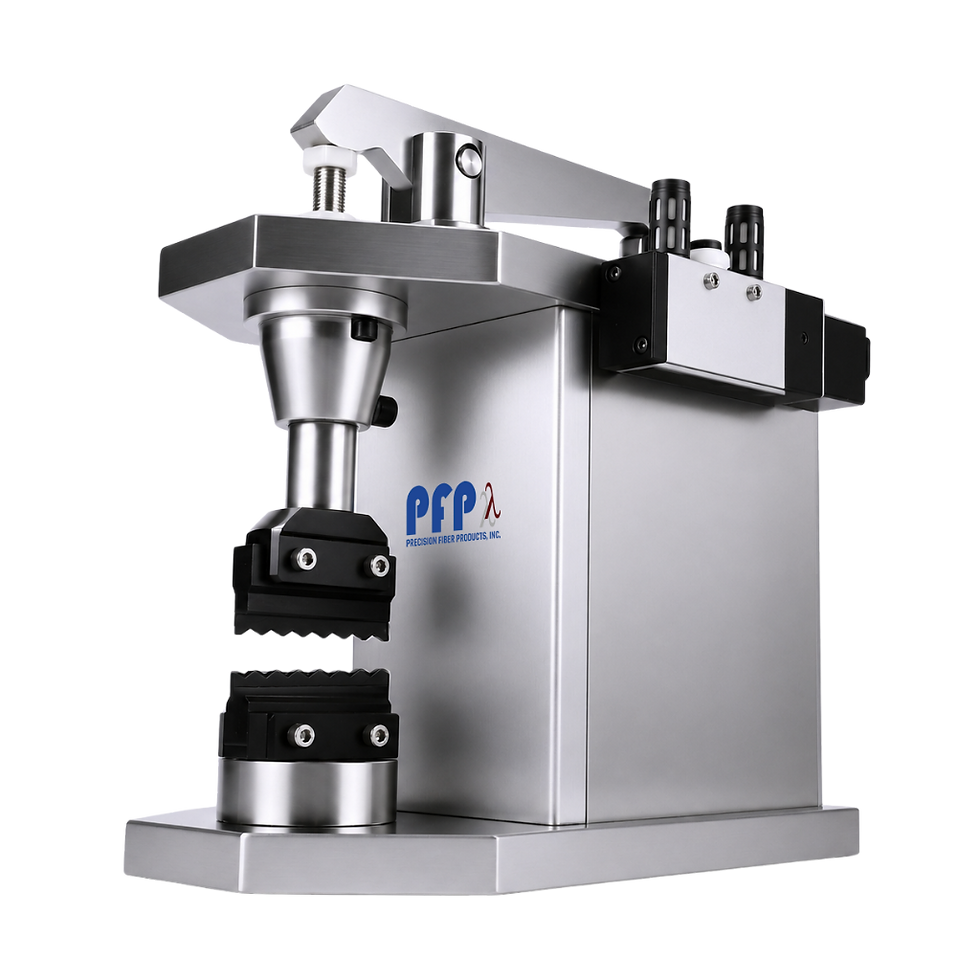
Crimping Tools for Fiber Optic Connector Assembly
A fiber optic crimp tool applies controlled compression to a connector crimp sleeve, collar or cable-retention component. Depending on the connector design, this crimp secures the cable strength members and connector hardware during termination.
Crimping does not align, cleave or polish the optical fiber. It is one step within a connector assembly process that may also require cable stripping, fiber preparation, epoxy, curing, polishing, cleaning and inspection.
The correct crimper must match the connector components, crimp sleeve dimensions, required cavity geometry and assembly procedure. Tools and dies that appear similar are not necessarily interchangeable.
Precision Fiber Products offers complete fiber optic crimping tools, handle-only crimp systems, interchangeable connector dies and pneumatic crimping equipment for field, laboratory and production applications.
Types of Fiber Optic Crimping Equipment
Types of Fiber Optic Crimping Equipment
A complete hand crimp tool combines the tool frame and required crimping cavities in one product. This configuration can be useful when the same connector hardware and crimp dimensions are used repeatedly.
The PFP Fiber Optic Crimp Tool is designed for PFP connector applications and lists four hex sizes: 0.197, 0.171, 0.147 and 0.131 inches. Confirm the required hex size against the connector and crimp-ring specifications before use.
PFP also lists a Paladin 8000 Series crimper for selected SMA, SMB, SFR, ST and SC applications. Review the product configuration to confirm whether the required die is included before ordering.
Crimper Handles and Interchangeable Dies
A handle-and-die system allows a compatible crimper frame to be configured for different connector hardware. The tool handle and die must belong to a compatible system; a die should not be selected only because its cavity dimensions appear suitable.
The Paladin CrimpAll / 8000 Series fiber optic crimper is sold as a handle-only product and requires a compatible die.
Connector names alone do not determine the correct cavity. Verify the connector manufacturer, crimp sleeve or ring, cable construction and specified crimp dimensions.
Pneumatic Crimping Equipment
Pneumatic equipment can support repeatable crimping in production and laboratory assembly environments. It may be appropriate when process consistency, operator efficiency or recurring production volume makes a manually operated tool less suitable.
The PFP Fiber/Copper Pneumatic Crimping Machine includes adjustable pneumatic pressure control and configurable crimping die options. Select the power and die configurations required by the production process before ordering.
A machine described as suitable for both fiber and copper still requires the correct tooling, settings and assembly procedure for each product.
How to Choose a Fiber Optic Crimp Tool
Start With the Connector Assembly Specification
Identify the exact connector manufacturer and model before choosing a crimper. Connectors within the same LC, SC, FC, ST or SMA family may use different sleeves, rings and crimp dimensions.
Use the connector assembly instructions to determine:
-
Crimp sleeve or ring type
-
Required cavity size
-
Hex, round or other specified crimp profile
-
Cable and strength-member construction
-
Number and sequence of crimps
-
Required tool or approved equivalent
Do not assume that a general-purpose connector crimper is suitable for every product in the same connector family.
Confirm Handle and Die Compatibility
For a handle-and-die system, verify that the die is designed for the selected crimper frame. A die from another product series may not fit correctly or provide the intended crimping action.
If a product is labeled “handle only,” the compatible die should be ordered separately. If the listing is for a complete crimper, confirm which die or cavity set is supplied with the tool.
Verify the Crimp Cavity Size
The crimp cavity must match the specified connector sleeve or crimp ring. A cavity that is too large may not secure the assembly correctly, while an undersized cavity can deform components or damage the tool.
Do not attempt to correct a loose crimp by automatically using the next smaller cavity. Confirm the cable diameter, sleeve, connector and required crimp dimensions before repeating the assembly.
Choose Between Hand and Pneumatic Crimping
A hand crimper can be appropriate for field termination, repair, laboratory work and lower-volume cable assembly. A pneumatic crimping machine may be more suitable for recurring production where configurable tooling and controlled process settings are required.
The production volume alone should not determine the selection. Also consider the connector range, changeover requirements, available dies, operator training, workspace and quality-control procedure.
Connector Compatibility
Current PFP listings include crimp tools or dies for selected applications involving:
-
FC fiber optic connectors
-
SC fiber optic connectors
-
ST fiber optic connectors
-
LC fiber optic connectors
-
SMA fiber optic connectors
-
MT-RJ fiber optic connectors
-
Selected SMB and SFR connector configurations
-
PFP connector products requiring the listed hex sizes
-
Compatibility varies by tool and die. A product that supports one SC or LC connector assembly should not automatically be described as compatible with every SC or LC connector.
For connector bodies, crimp rings and related assembly hardware, direct users to the Fiber Optic Connectors & Interconnect Components category.
Fiber Optic Crimp Tool Applications
Fiber optic crimping tools may be used for:
-
Fiber optic connector termination
-
Patch cable and pigtail production
-
OEM cable assembly
-
Field installation and repair
-
Telecom and broadband deployment
-
Data center cable preparation
-
Laboratory connector assembly
-
Production-line crimping
-
Custom fiber optic assemblies
-
Connector retermination and maintenance
-
The required tool depends on the connector, cable and termination procedure rather than the application name alone.
For stripping, cutting and scribing equipment used during cable preparation, direct users to the main Fiber Optic Hand Tools category.
Fiber Optic Crimp Tools FAQ
A fiber optic crimp tool applies controlled compression to a connector crimp sleeve, collar or cable-retention component. Depending on the connector design, the crimp helps secure the cable strength members and connector hardware during termination.
Choose a complete crimper when its supplied cavities match the connector hardware being assembled. Choose a handle-and-die system when compatible interchangeable dies are required. A handle-only product cannot perform the intended crimp without the correct die.
No. A die must match the crimper frame as well as the connector sleeve, crimp dimensions and required profile. Similar-looking dies from different tool systems should not be treated as interchangeable.
Current product listings identify selected applications for FC, SC, ST, LC, SMA and MT-RJ fiber optic connectors. Other listed configurations include SMB and SFR products. Compatibility and required cavity sizes vary by tool and die.
Use the connector and crimp-ring manufacturer’s specified dimensions. Confirm the sleeve or ring, cable construction, required profile and approved tooling. Do not select a smaller cavity simply because the first crimp appears loose.
A hand crimper is operated manually and can be suitable for field, repair, laboratory and lower-volume assembly work. A pneumatic machine uses controlled air pressure and configurable tooling for production or laboratory processes requiring repeatable operation. Both must be configured for the specific connector components.
Only when the equipment manufacturer documents both applications and the machine is fitted with the correct tooling and settings. Fiber and copper assemblies may require different dies, components and process controls.
Select the Correct Fiber Optic Crimping Tool
Compare complete crimp tools, handle-only systems, connector dies and pneumatic equipment for your assembly process. Contact Precision Fiber Products for help matching the tool, die configuration and crimp dimensions to your connector and cable.
Fiber Optic Crimp Tools FAQ